


Look along a dumbbell rack and the gaps between pairs seem tiny: 1kg, 2kg, 3kg, 4kg. In percentage terms, though, they are anything but. Moving from 2kg to 3kg increases the load by half, and going from 1kg to 2kg doubles it. That is why choosing a first pair is less about guessing what you can lift and more about testing what you can control, for the right number of repetitions, without your joints complaining the next day.
Three Numbers Worth Keeping in Your Head
- 8 to 12 repetitions: Singapore’s physical activity guidelines suggest this range per set as a general good practice for building strength.
- Two in reserve: At the end of a set, you should feel you could manage about two more clean repetitions.
- 24 hours: How your muscles and joints feel the next morning tells you whether the weight was right.
Why Do Small Jumps Feel So Big?
Smaller muscles, such as those in the shoulders and arms, are where the jumps feel sharpest. A move from 2kg to 3kg in a shoulder press can turn a smooth set into a struggle, with the elbows drifting and the lower back arching to help. Leg exercises usually tolerate bigger increases, because the muscles involved are larger and stronger.
A senior fitness personal trainer deals with this all the time. Rather than jumping to the next dumbbell, they might add two repetitions, slow down the lowering phase or introduce a short pause at the hardest point. Each of these makes an exercise more demanding without changing the weight in your hand, so progress can continue between the larger steps on the rack.
How Do You Test a Weight Before Committing?
The simplest test is a trial set. Pick a pair you think is light, perform the movement for ten repetitions, and pay attention to how the last three feel. If they feel exactly like the first three, the weight is too light to do much. If your breathing stops, your shoulders hunch or the dumbbells start to wobble, it’s too heavy for now.
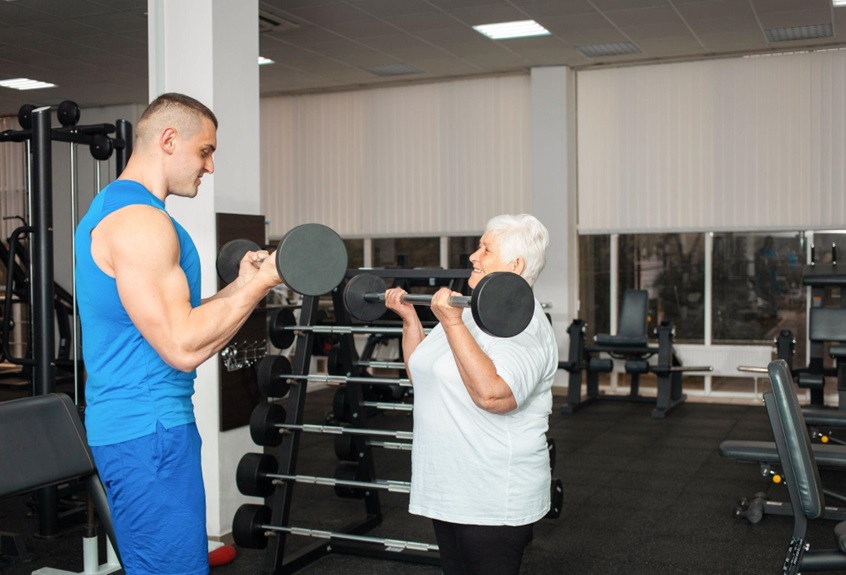
The right weight sits in between: the final repetitions feel noticeably harder, yet your technique stays the same from the first to the last. This is where personal training for seniors in Singapore earns its keep, because an experienced eye can tell the difference between effort and strain long before you can feel it yourself. A trainer standing beside the rack, as many do in a first session, can hand you a pair, watch a few repetitions and switch you to another pair within a minute.
Should Every Exercise Use the Same Pair?
Almost certainly not. Most people need different weights for different movements, and it’s common for a beginner’s first session to involve two or even three pairs. As a rough guide:
- Bicep curls often start a little heavier than overhead presses
- Shoulder raises to the side usually need the lightest weights of all
- Goblet squats and carries can take more weight once form is steady
- Some exercises start with no dumbbells at all, using body weight or a band
Personal training for seniors in Singapore typically begins with an assessment so these choices aren’t made blind. Your trainer will usually ask about old injuries, arthritis, blood pressure and any medication, since some of these affect how hard you should push and how you should breathe during the effort.
What If the Lightest Dumbbell Is Still Too Heavy?
That’s more common than people admit, and it’s no reason to give up. Resistance bands offer lighter options, and the tension can be adjusted by changing your grip. Shortening the range of motion, doing the exercise seated, or performing fewer repetitions with longer rests are all valid ways to begin, and a senior fitness personal trainer can combine them so the session still feels worthwhile. Strength tends to build quite quickly in the early weeks of training, so the lightest pair usually becomes manageable sooner than expected.
When Is It Time to Move Up?
A widely used rule of thumb is the “two-for-two” approach: if you can complete two more repetitions than your target on the last set, in two sessions in a row, it’s reasonable to try the next weight up. When you do, it’s normal to drop back to the lower end of the repetition range for a while.
Moving up should never mean sacrificing form. If the heavier pair causes your technique to change, return to the previous weight and use the slower tempo or extra repetitions for a few more weeks. A senior fitness personal trainer will often keep a simple log of your weights and repetitions, which turns these decisions into something based on numbers rather than mood.
Starting weights are personal, and the right pair today might feel easy in a month. Personal training for seniors in Singapore helps make each of those changes safely, so the heavier dumbbells come when you’re ready for them.
Standing in front of the rack doesn’t have to involve guesswork. Contact Vigeo Health & Fitness to book a first session and have your starting weights chosen with you, one pair at a time.
