


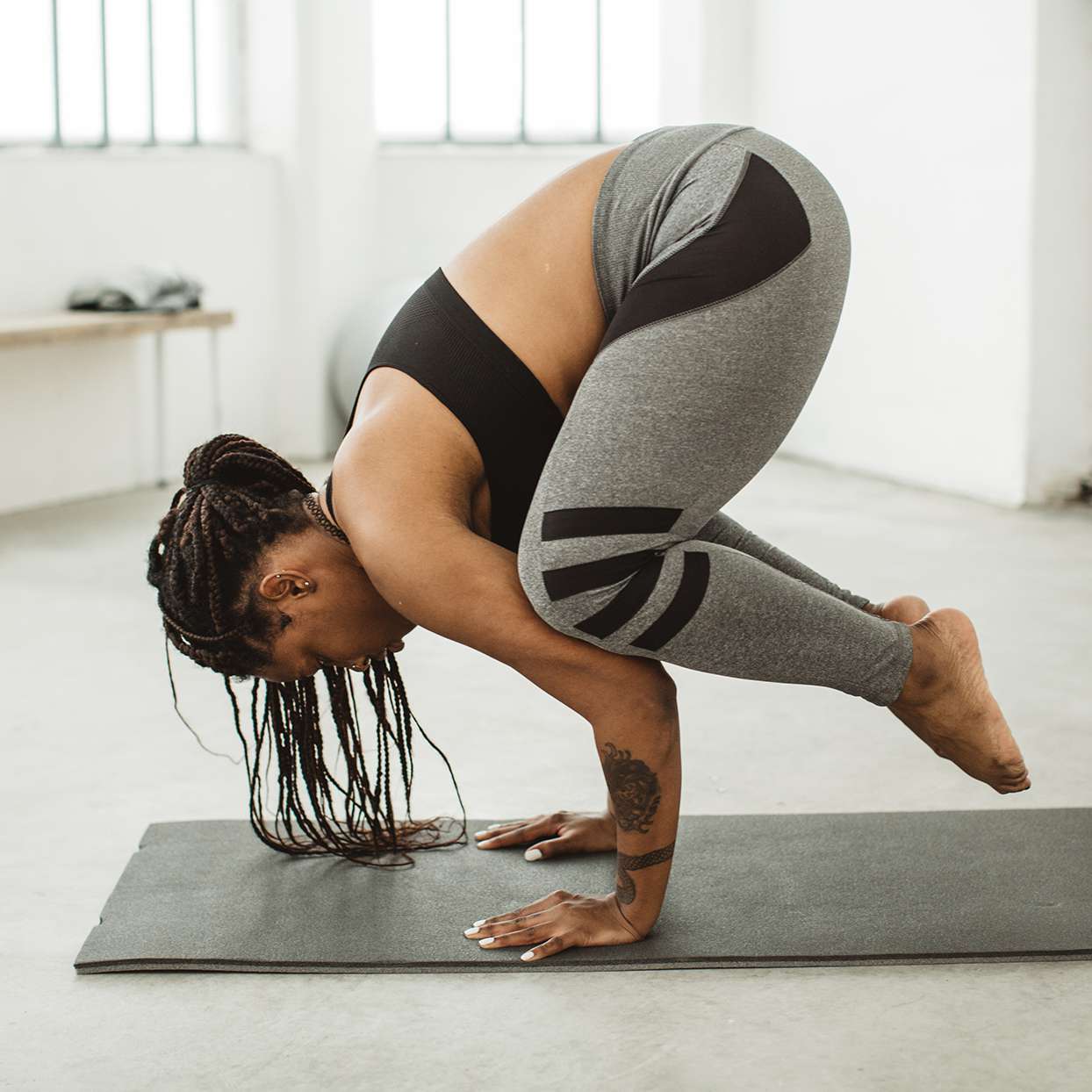
A posture does not need visible movement to create substantial muscular work. Remaining in a lunge, balance or supported plank requires muscles to keep producing force while the joints stay within a relatively stable range. As time passes, the effort can rise even though the shape appears unchanged.
Longer holds are a defining training variable in many hatha yoga sessions. They can develop positional strength, attention and breathing control, but duration must match the practitioner’s capacity. Staying longer is not automatically more advanced, especially when fatigue changes alignment or removes the ability to exit calmly.
Isometric Work Is Still Strength Work
When muscles produce force without a large visible change in joint angle, the action is commonly described as isometric. The quadriceps in a bent-knee standing posture and the shoulders in a plank are clear examples.
Isometric strength tends to be specific to the trained position. Holding one knee angle may improve capacity around that range without replacing strength through every possible angle. A varied practice therefore uses different positions and transitions rather than relying on one prolonged hold.
Time Under Tension Changes the Dose
Two practitioners may use the same posture but receive different training demands if one holds it for fifteen seconds and the other for a minute. Duration affects fatigue, breathing and the ability to maintain force.
Increasing time under tension is one way to progress without deepening the pose. A moderate position held with control may provide a more useful strength stimulus than an extreme position that immediately requires compensation.
Body Position Determines Which Muscles Work
Small setup changes can alter a hold considerably. In a high lunge, stance length, knee angle, trunk position and arm placement all affect the demand on the legs and torso.
This is why pose names alone do not describe training load. An instructor can make a posture more accessible by shortening the stance, reducing knee bend or lowering the arms while preserving its underlying purpose.
Fatigue Can Be Local or Systemic
The first sensation may appear in a specific area, such as the front thigh or shoulders. With a longer hold, breathing can become faster and the effort can feel more general.
Local muscular fatigue does not always mean the target area is weak. The position may be new, the leverage may be difficult or earlier parts of class may already have used the same muscles. Class sequencing shapes the response.
Leverage Can Matter More Than Added Weight
Yoga primarily uses body weight, but leverage can make that load easier or harder. Extending the arms, lengthening the stance or moving the centre of mass farther from the base increases the muscular demand of many holds.
A small change can therefore be a meaningful progression. Practitioners do not need to chase maximum depth to work harder. Adjusting leverage while retaining steady breathing often provides a clearer and safer challenge.
Longer Holds Reveal Compensation
A posture may look controlled for the first few breaths, then gradually change. The front knee may drift, the pelvis may rotate, the shoulders may rise or the lower back may take over.
These changes are useful information. They indicate that the current duration, range or leverage may exceed the practitioner’s ability to maintain the intended strategy. Ending or modifying the hold preserves training quality.
Breathing Influences Perceived Effort
Holding the breath can temporarily create a sense of stiffness, but it also makes a moderate pose feel more urgent. Longer holds provide an opportunity to maintain force while allowing the breath to continue.
Breathing does not need to remain unusually slow at every intensity. It may naturally quicken. The important distinction is between a responsive breath and involuntary bracing that leaves the practitioner unable to speak, adjust or exit.
Joint Sensation Requires Careful Interpretation
Muscular effort often feels broad, warm or tiring. Sharp, pinching or unstable joint sensations are different and should not be treated as evidence that a hold is effective.
Reducing range, changing the base or using a prop may shift the work towards the muscles. If discomfort continues, the pose should be stopped. Longer exposure is not a remedy for an unsuitable position.
Balance Holds Include a Coordination Demand
Standing on one leg requires continuous corrections from the foot, ankle, hip and trunk. As fatigue builds, those corrections may become larger even if the posture is technically maintained.
Using a wall or keeping one toe lightly grounded can extend useful practice time without turning every attempt into a fall. Support may allow the target leg to build endurance while the nervous system learns the position.
Upper-Body Holds Need Progressive Loading
Plank variations, downward-facing positions and arm-supported postures can challenge the wrists, elbows and shoulders. Extending duration too quickly may irritate tissues that are not accustomed to sustained weight-bearing.
Progressions can include a higher hand position, knees on the mat or shorter repeated holds. Several controlled efforts with rest may be more appropriate than one maximal hold.
Repeated Holds Differ from One Continuous Hold
Accumulating sixty seconds as three twenty-second efforts is not identical to holding continuously for a minute. Short breaks allow partial recovery and often preserve technique.
Repeated holds can help beginners practise setup and exit several times. A continuous hold may be introduced later when the practitioner can maintain the intended position without escalating tension unnecessarily.
Transitions Add Dynamic Strength
Entering and leaving a posture requires movement through changing joint angles. If a class focuses only on the final hold, it may overlook the strength needed to control these transitions.
Moving slowly into and out of a lunge or squat complements positional endurance. The practitioner learns to manage force across a range rather than only at the final shape.
Longer Is Not Always Better
Duration should serve the purpose of the class. A restorative setup may be held longer because props carry much of the weight, while an active balance may become unproductive after technique deteriorates.
Competitive endurance can encourage people to ignore symptoms or copy neighbours. A high-quality hold ends because the intended work is complete, not because someone has outlasted the room.
Recovery Affects Holding Capacity
Sleep, nutrition, stress and other training influence how long a posture feels manageable. A duration that worked last week may be inappropriate after a demanding day.
Practitioners can adjust without losing progress. Reducing depth or using support maintains participation while respecting current capacity. Consistency across months matters more than matching one previous performance.
Progress Can Be Measured in Several Ways
Longer duration is only one sign of adaptation. A practitioner may use the same hold time with calmer breathing, better weight distribution or less unnecessary tension.
Another form of progress is selecting an appropriate variation sooner. Recognising the exact point where technique starts to change demonstrates better self-regulation, not reduced commitment.
Class Design Should Distribute Demand
Several long holds targeting the same muscles can create substantial cumulative fatigue. Instructors may alternate sides, change body regions or use lower-load movement between demanding positions.
Students should consider their wider exercise schedule too. A leg-intensive class may affect strength training, running or sport the following day. Recovery is part of productive loading.
Build Duration Without Losing the Purpose
At Yoga Edition, practitioners can follow the teacher’s timing while choosing a range and support level they can control. Coming out early, then rejoining, is preferable to remaining in a position after grip, balance or joint comfort has deteriorated.
Longer holds are valuable because they make time an active training variable. Used carefully, they reveal how strength, breathing and attention interact. Their benefit comes from sustained quality, not from treating discomfort or collapse as proof of effort.
Frequently Asked Questions
Do longer yoga holds build muscle?
They can contribute to muscular strength and endurance, especially when the position creates sufficient tension. A complete programme should still include varied ranges and movements.
How long should a beginner hold a pose?
There is no universal duration. The hold should allow comfortable breathing, controlled alignment and a calm exit.
Is shaking during a hold dangerous?
Mild muscular shaking can occur with fatigue or unfamiliar effort. Stop or modify if it accompanies pain, instability, dizziness or loss of control.
Should I hold a pose until the muscle fails?
No. Yoga holds do not need to reach complete muscular failure. Ending while technique remains reliable supports better practice.
Are several short holds effective?
Yes. Repeated shorter holds can build total work while preserving form and allowing practice of entries and exits.
Why do my joints hurt before my muscles tire?
The range, leverage or setup may not suit you. Reduce the demand, use support and seek professional guidance if joint pain persists.
