


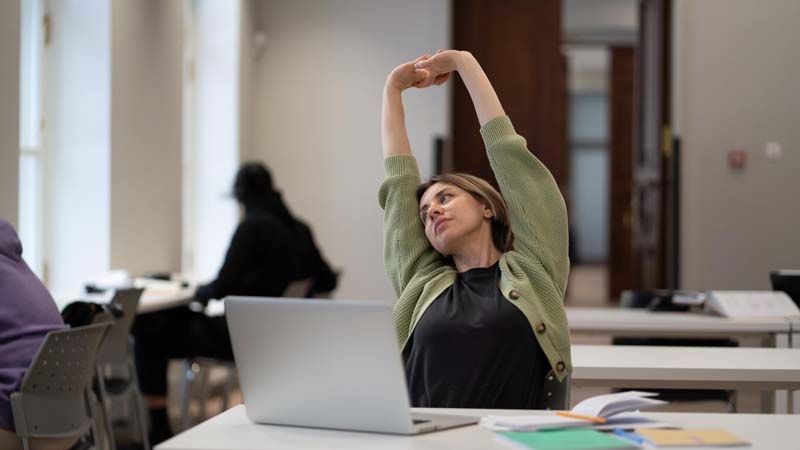
Modern office work often requires long hours of sitting, typing, and focusing on screens. Over time, this routine can lead to stiffness, fatigue, poor posture, and reduced energy. Fortunately, simple desk exercises can help counter these effects without requiring a gym membership, workout clothes, or extra time in your schedule.
Incorporating short movement breaks throughout your workday improves circulation, reduces muscle tension, supports better posture, and helps maintain productivity. This guide explains practical, easy-to-follow desk exercises that fit naturally into a busy office routine.
Why Desk Exercises Matter for Office Workers
Sitting for extended periods affects nearly every part of the body. Muscles tighten, joints stiffen, and circulation slows. Over time, this can contribute to discomfort in the neck, shoulders, lower back, hips, and wrists.
Adding brief movement sessions during your workday can:
- Improve posture and spinal alignment
- Reduce neck and shoulder tension
- Prevent wrist and hand strain
- Increase blood circulation
- Support mental focus and energy
- Lower the risk of repetitive strain injuries
Even short exercise breaks lasting one to three minutes can produce noticeable benefits when practiced consistently.
Neck Stretches to Release Upper Body Tension
Neck stiffness is one of the most common complaints among office workers. These gentle movements help reduce tension caused by prolonged screen time.
Side Neck Stretch
Sit upright with your shoulders relaxed.
Steps:
- Tilt your head slowly toward your right shoulder
- Hold for 10 to 15 seconds
- Return to center
- Repeat on the left side
Avoid lifting your shoulder toward your ear. The stretch should feel gentle, not forced.
Forward Neck Stretch
This movement relieves tension at the base of the skull.
Steps:
- Lower your chin toward your chest
- Hold for 10 seconds
- Slowly lift your head back to neutral
Repeat two to three times during the day.
Shoulder Rolls for Posture Support
Rounded shoulders are common during computer work. Shoulder rolls help restore mobility and posture alignment.
Steps:
- Sit upright with feet flat on the floor
- Lift both shoulders upward
- Roll them backward in a circular motion
- Repeat 10 times
- Reverse direction and repeat
This exercise improves blood flow and relieves upper back tightness.
Seated Spinal Twist for Back Flexibility
The spine benefits from gentle rotation throughout the day.
Steps:
- Sit tall in your chair
- Place your right hand on the back of your chair
- Place your left hand on your thigh
- Rotate your torso slowly to the right
- Hold for 10 to 15 seconds
- Return to center and repeat on the opposite side
Keep your hips facing forward while rotating your upper body.
Wrist and Finger Stretches for Typing Relief
Frequent keyboard use strains wrist and finger muscles. These exercises reduce stiffness and discomfort.
Wrist Flexor Stretch
Steps:
- Extend one arm forward with palm facing upward
- Use your other hand to gently pull your fingers downward
- Hold for 10 seconds
- Switch sides
Wrist Extensor Stretch
Steps:
- Extend one arm forward with palm facing downward
- Gently pull fingers toward your body
- Hold for 10 seconds
- Switch sides
Perform these stretches every hour if you type frequently.
Seated Leg Extensions to Improve Circulation
Lower body movement supports circulation and reduces stiffness caused by prolonged sitting.
Steps:
- Sit upright with both feet flat on the floor
- Extend one leg straight in front of you
- Hold for five seconds
- Lower slowly
- Repeat 10 times per leg
This exercise also activates thigh muscles and supports knee mobility.
Ankle Rolls to Prevent Lower Leg Fatigue
Ankle stiffness often develops after sitting for extended periods.
Steps:
- Lift one foot slightly off the floor
- Rotate your ankle clockwise 10 times
- Rotate counterclockwise 10 times
- Repeat with the other foot
This movement supports circulation and reduces swelling risk.
Seated Core Activation for Better Stability
Strong core muscles support healthy posture and reduce back strain.
Steps:
- Sit upright without leaning against your chair
- Tighten your abdominal muscles
- Hold for five seconds
- Relax
- Repeat 10 times
This simple activation strengthens stabilizing muscles without visible movement.
Chair Squats for Quick Energy Boosts
Chair squats activate multiple muscle groups and increase blood flow.
Steps:
- Stand in front of your chair
- Lower your body as if sitting down
- Stop just before touching the chair
- Stand back up
- Repeat 10 to 15 times
Keep your back straight and knees aligned with your toes.
Seated Shoulder Blade Squeeze for Upper Back Strength
This exercise counteracts forward-leaning posture.
Steps:
- Sit upright
- Pull your shoulder blades together
- Hold for five seconds
- Relax
- Repeat 10 times
It helps stabilize the upper back and improve posture awareness.
Desk Push-Ups for Upper Body Activation
Desk push-ups are simple and effective strength exercises.
Steps:
- Stand facing your desk
- Place hands shoulder-width apart on the desk edge
- Step back slightly
- Lower your chest toward the desk
- Push back up
Repeat 10 to 12 times.
This exercise strengthens arms, shoulders, and chest muscles.
Eye Relaxation Exercises to Reduce Screen Fatigue
Eye strain affects concentration and comfort throughout the workday.
Try the 20-20-20 method:
- Every 20 minutes
- Look at something 20 feet away
- For at least 20 seconds
This reduces visual fatigue and supports eye health.
How Often Office Workers Should Perform Desk Exercises
Consistency matters more than intensity. Short movement breaks throughout the day produce the best results.
Recommended routine:
- Neck stretches every hour
- Wrist exercises after typing sessions
- Standing movements every 60 to 90 minutes
- Leg exercises two to three times daily
Setting reminders can help build lasting habits.
Tips for Making Desk Exercises Part of Your Daily Routine
Many employees struggle to stay consistent with workplace movement. Small adjustments make it easier to maintain a routine.
Helpful strategies include:
- Scheduling movement reminders on your calendar
- Pairing exercises with regular tasks like emails or meetings
- Performing stretches during phone calls
- Keeping posture awareness throughout the day
- Adjusting chair height and monitor position ergonomically
Simple habits lead to long-term improvements.
Signs You Need More Frequent Desk Movement Breaks
Your body often signals when it needs movement. Recognizing these signs helps prevent discomfort from worsening.
Watch for:
- Neck stiffness
- Shoulder tightness
- Wrist soreness
- Lower back fatigue
- Tingling in fingers
- Reduced focus or energy
Short exercise breaks usually relieve these symptoms quickly.
Creating a Balanced Workplace Movement Routine
A complete desk exercise routine should include stretching, mobility, and light strengthening movements. Combining these categories supports posture and circulation while preventing muscle imbalance.
An effective daily sequence might include:
- Morning posture reset stretches
- Midday leg activation exercises
- Afternoon shoulder mobility work
- Evening wrist recovery stretches
Rotating exercises keeps routines engaging and sustainable.
Long-Term Benefits of Practicing Desk Exercises Regularly
Office workers who integrate simple exercises into their routines often notice improvements within weeks.
Common benefits include:
- Reduced muscle tension
- Improved posture awareness
- Increased energy levels
- Better concentration
- Fewer repetitive strain symptoms
- Greater comfort during long work sessions
These improvements support both productivity and overall well-being.
FAQ Section
1. Can desk exercises replace regular workouts?
Desk exercises support mobility and posture but should complement, not replace, full-body physical activity such as walking, strength training, or stretching routines outside work hours.
2. How long should each desk exercise session last?
Most desk exercises take between 30 seconds and two minutes. Performing several short sessions throughout the day is more effective than one long session.
3. Are desk exercises safe for people with back pain?
Many gentle desk movements help relieve mild discomfort. However, individuals with chronic or severe back conditions should consult a healthcare professional before starting new exercises.
4. Do desk exercises improve productivity at work?
Yes. Regular movement increases blood circulation and reduces fatigue, which supports mental clarity and sustained focus during work tasks.
5. Is it better to stand or stretch during breaks?
Both options are beneficial. Alternating between standing and stretching provides the greatest benefit for circulation and muscle activation.
6. Can desk exercises help prevent repetitive strain injuries?
Regular wrist, shoulder, and posture exercises reduce tension and improve muscle balance, lowering the risk of repetitive strain symptoms over time.
7. What is the best time to perform desk exercises during the workday?
The most effective strategy is to perform brief exercises every 60 to 90 minutes rather than waiting until discomfort appears. Frequent movement helps maintain comfort and posture throughout the day.
